
Risk Management for Beginners: Build a Clear Trading Risk Ledger
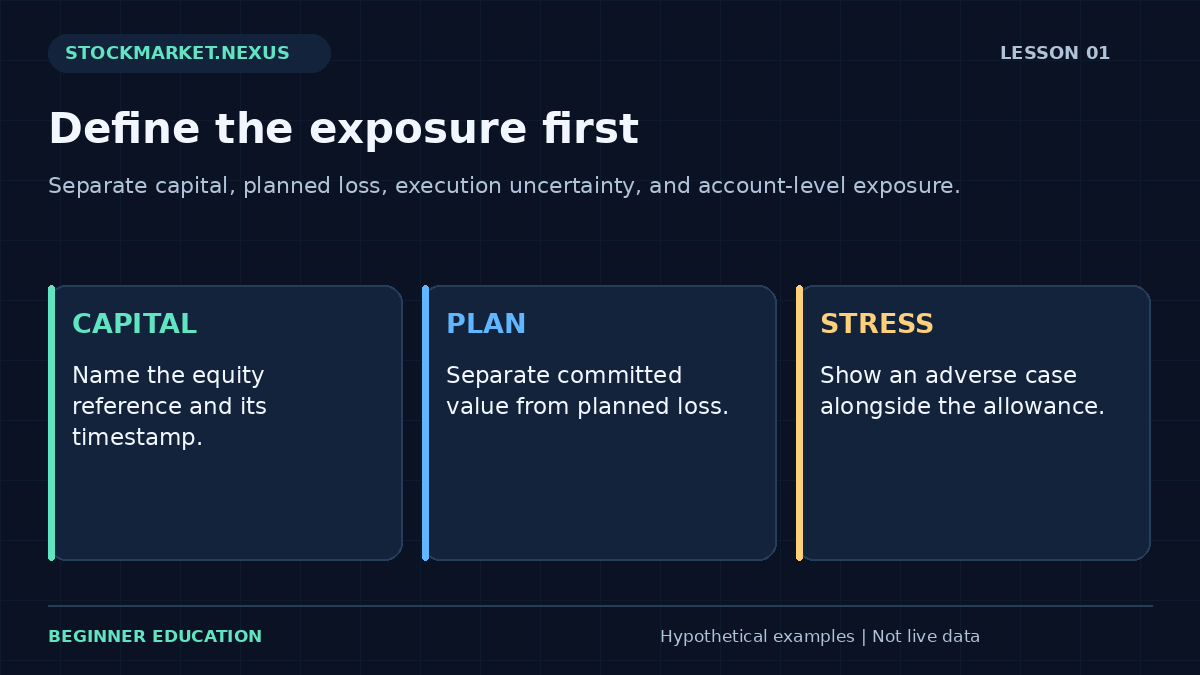
Separate capital, planned loss, execution uncertainty, and account-level exposure. Practice: Translate an allowance into dollars.
All information on this website is provided for educational and informational purposes only and does not constitute financial, investment or trading advice. Trading involves risk, including the possible loss of capital. Read the full disclaimer
Latest
Articles and guides on trading, market analysis and getting more out of the platform.
Separate capital, planned loss, execution uncertainty, and account-level exposure. Practice: Translate an allowance into dollars.
A share count depends on exit assumptions, costs, and available cash. Practice: Calculate a whole-share scenario.
Compare planned protective prices with actual or hypothetical execution. Practice: Compare planned and actual exit loss.
Separate target distances, assumed win rates, costs, and expected value. Practice: Test assumed expectancy.
Measure the peak, the decline, and the gain required to regain it. Practice: Calculate drawdown and recovery.
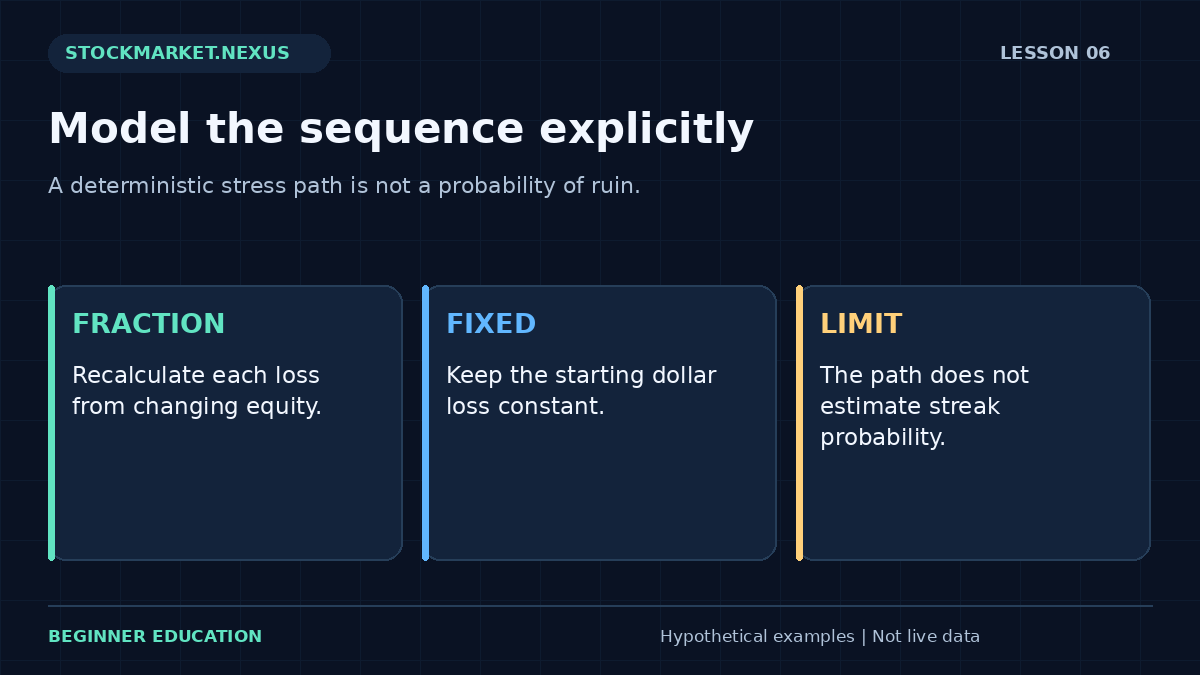
A deterministic stress path is not a probability of ruin. Practice: Compare fixed and fractional losses.
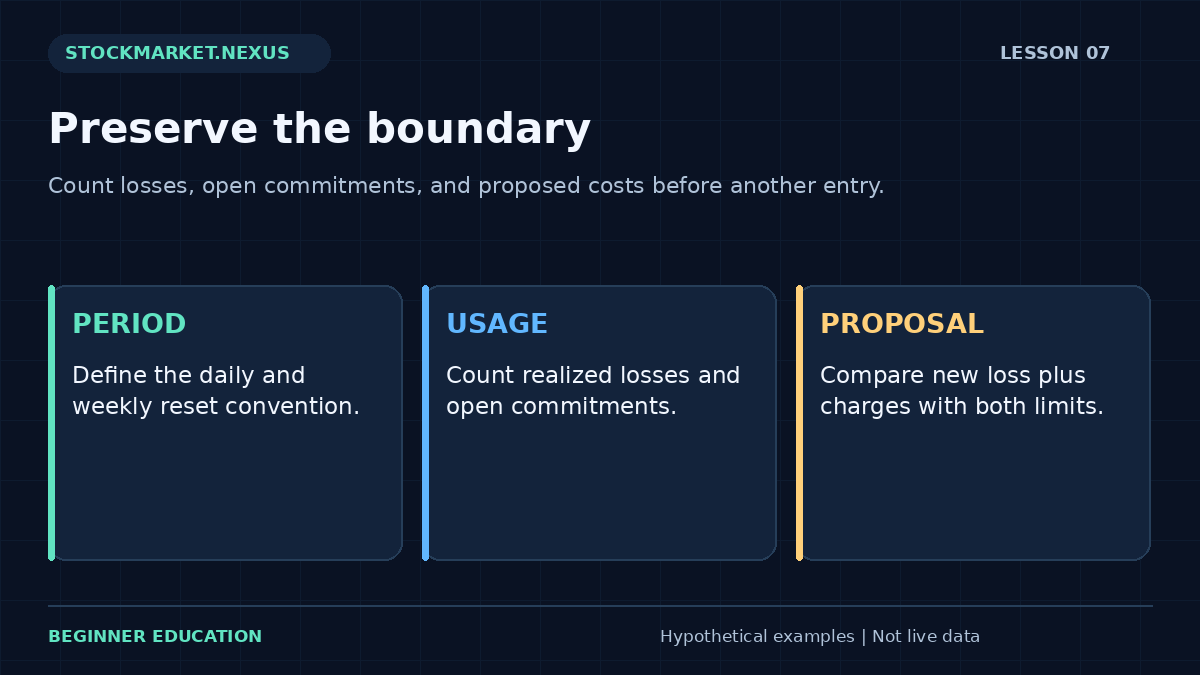
Count losses, open commitments, and proposed costs before another entry. Practice: Check daily and weekly capacity.
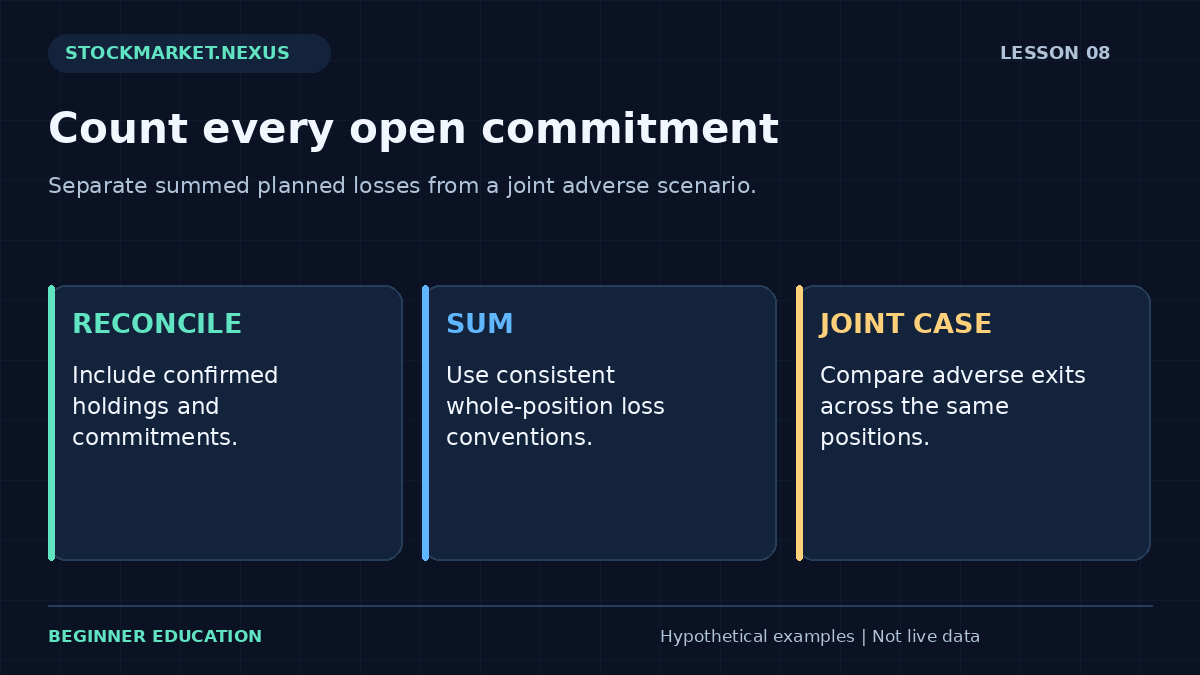
Separate summed planned losses from a joint adverse scenario. Practice: Aggregate open-position scenarios.
Several holdings can share one dominant issuer or economic driver. Practice: Measure portfolio concentration.
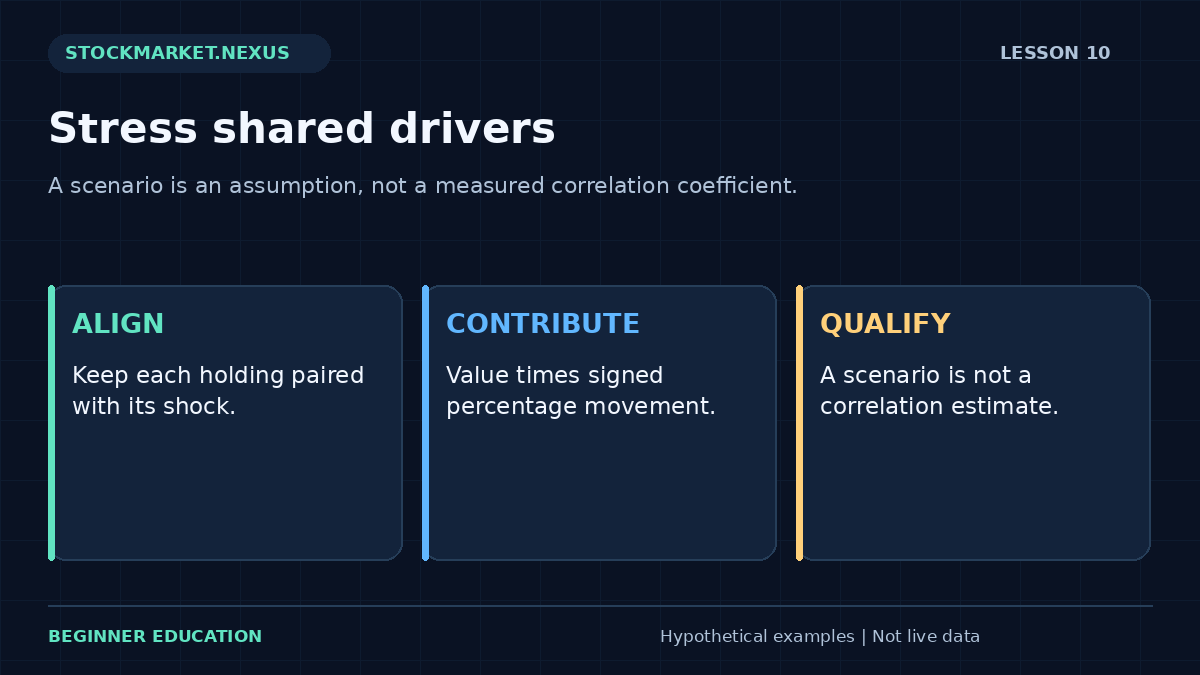
A scenario is an assumption, not a measured correlation coefficient. Practice: Stress aligned portfolio holdings.
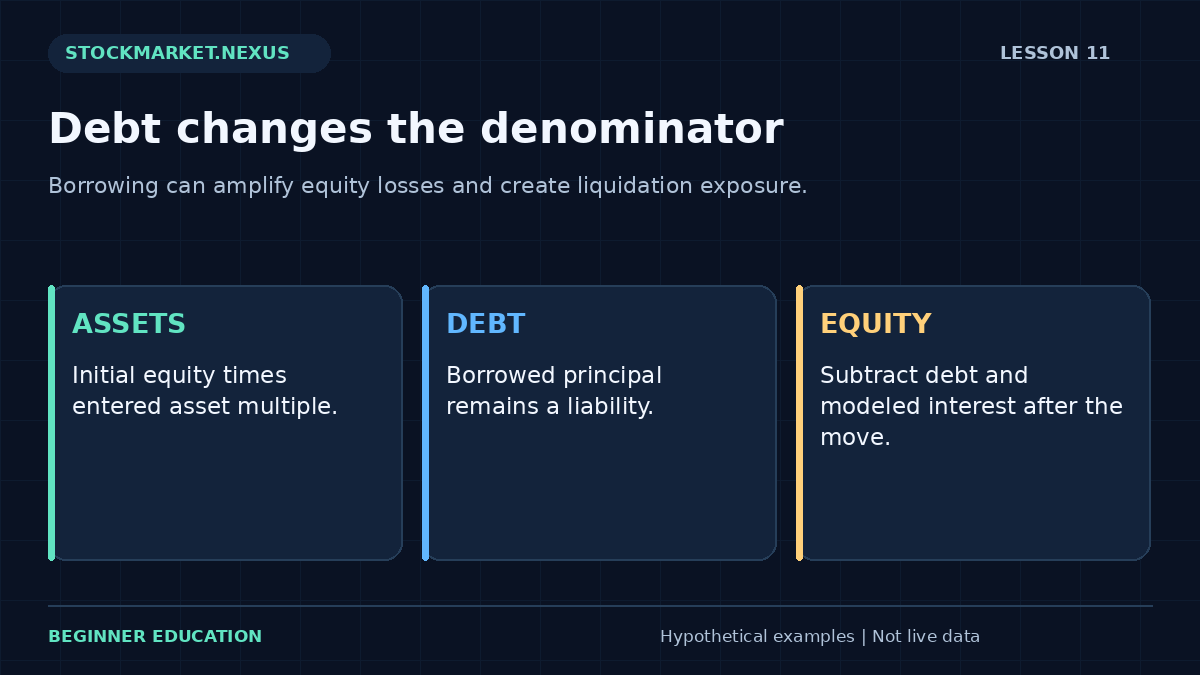
Borrowing can amplify equity losses and create liquidation exposure. Practice: Model leveraged equity.
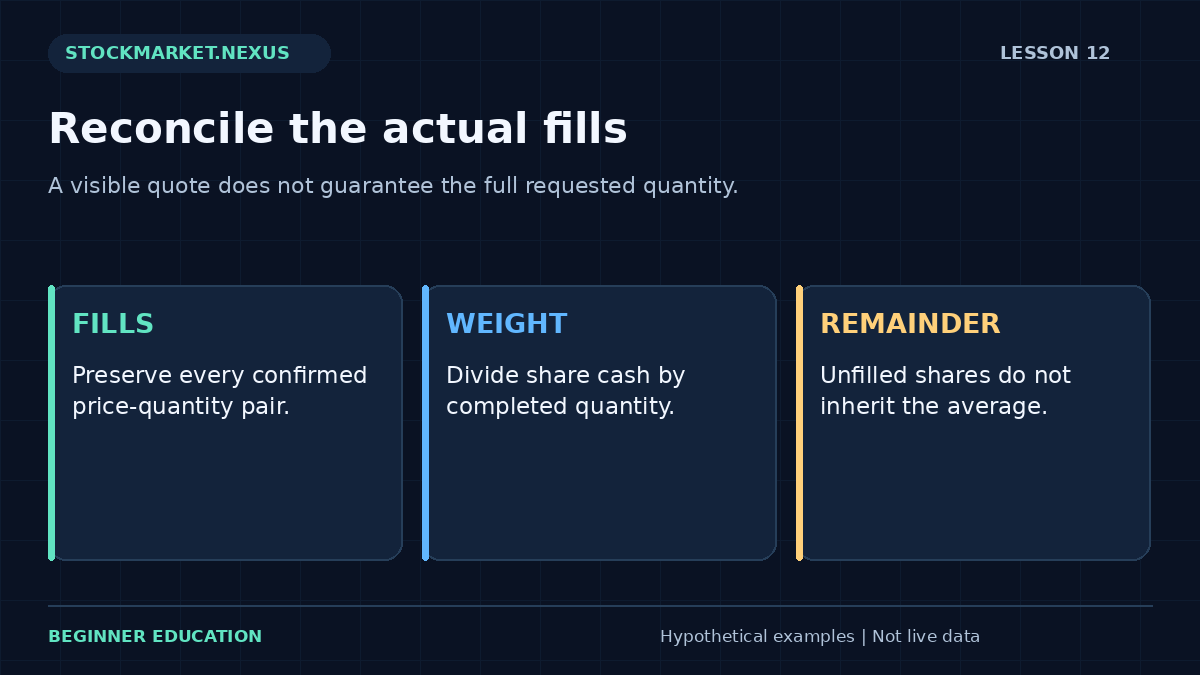
A visible quote does not guarantee the full requested quantity. Practice: Calculate weighted fill and shortfall.
Get daily AI insights, market updates, and trade opportunities delivered to your inbox.