
Swing Trading for Beginners: Build a Complete Plan From Entry to Exit
Prepare a complete swing-trading plan with executable entries, cash and quantity checks, event reviews, and reconciled exits.
All information on this website is provided for educational and informational purposes only and does not constitute financial, investment or trading advice. Trading involves risk, including the possible loss of capital. Read the full disclaimer
Trading Hub
Multi-session preparation, chart setups, overnight risk, portfolio exposure, and review. Learn through 15 illustrated guides and a fictional swing-trading practice lab.
15 LESSONS ยท STRUCTURED LEARNING
Learn watchlists, chart structure, pullbacks, breakouts, volatility, position sizing, overnight gaps, events, exits, and portfolio review. Each lesson includes original graphics and worked cases.
Start with Lesson 1 Open the Swing Trading Practice Lab
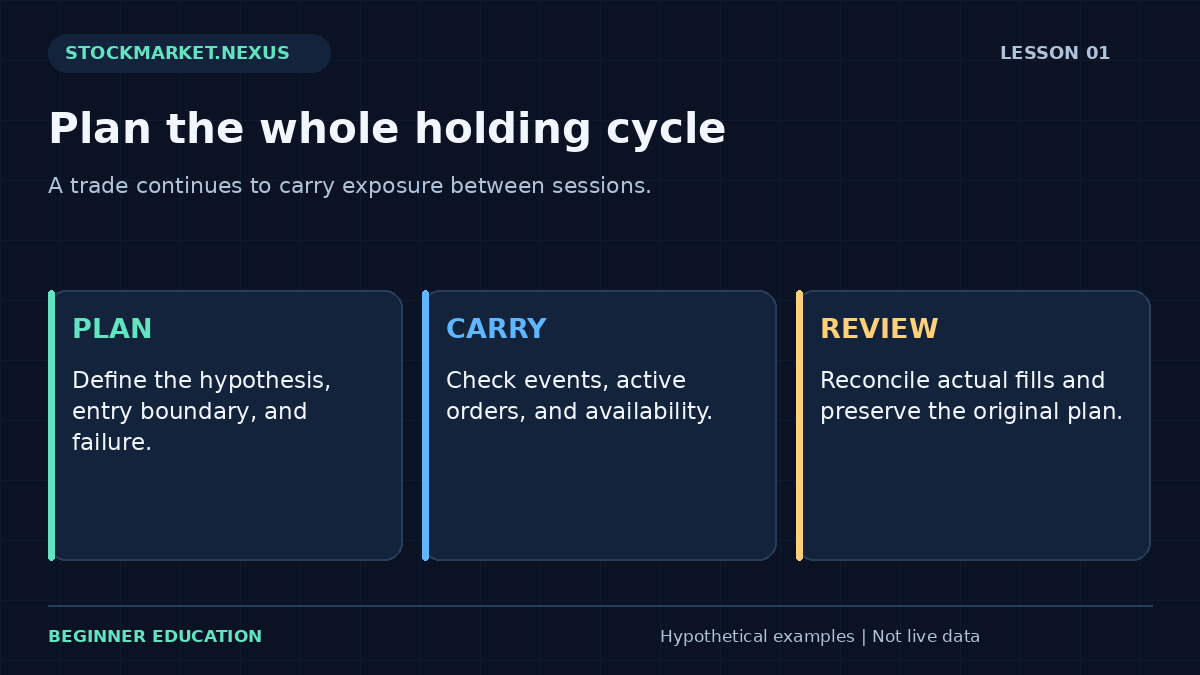
Prepare a complete swing-trading plan with executable entries, cash and quantity checks, event reviews, and reconciled exits.
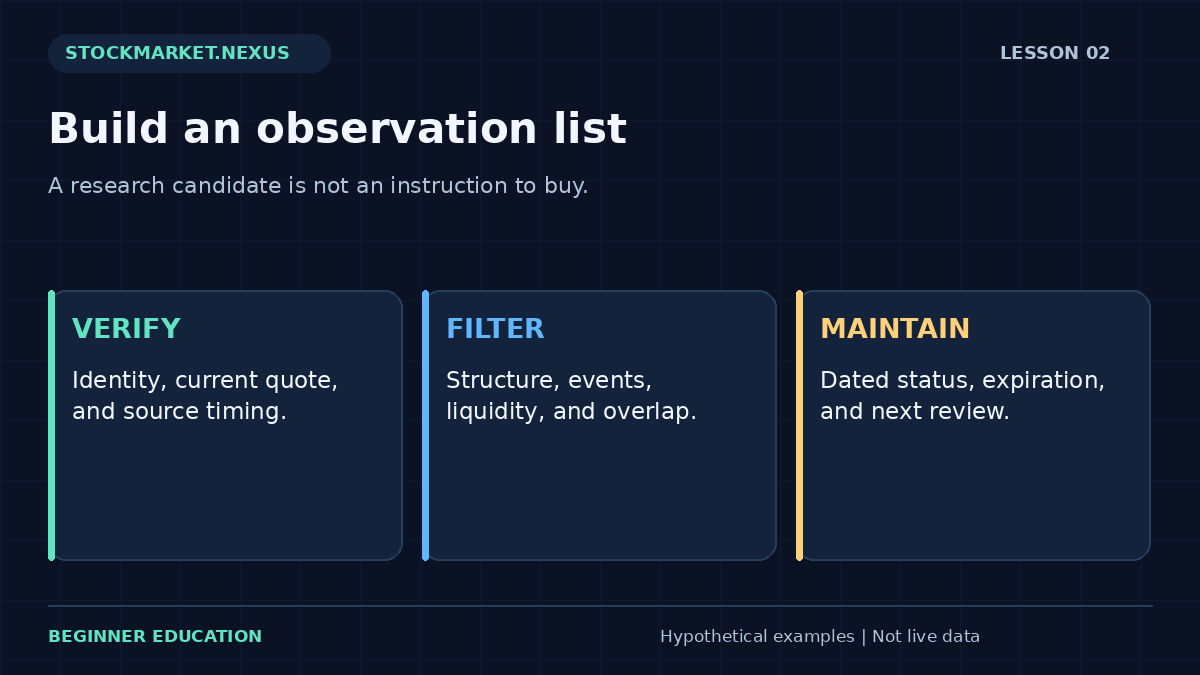
Build a small swing-trading watchlist using verified identity, liquidity, chart conditions, event timing, and reasons to pass.
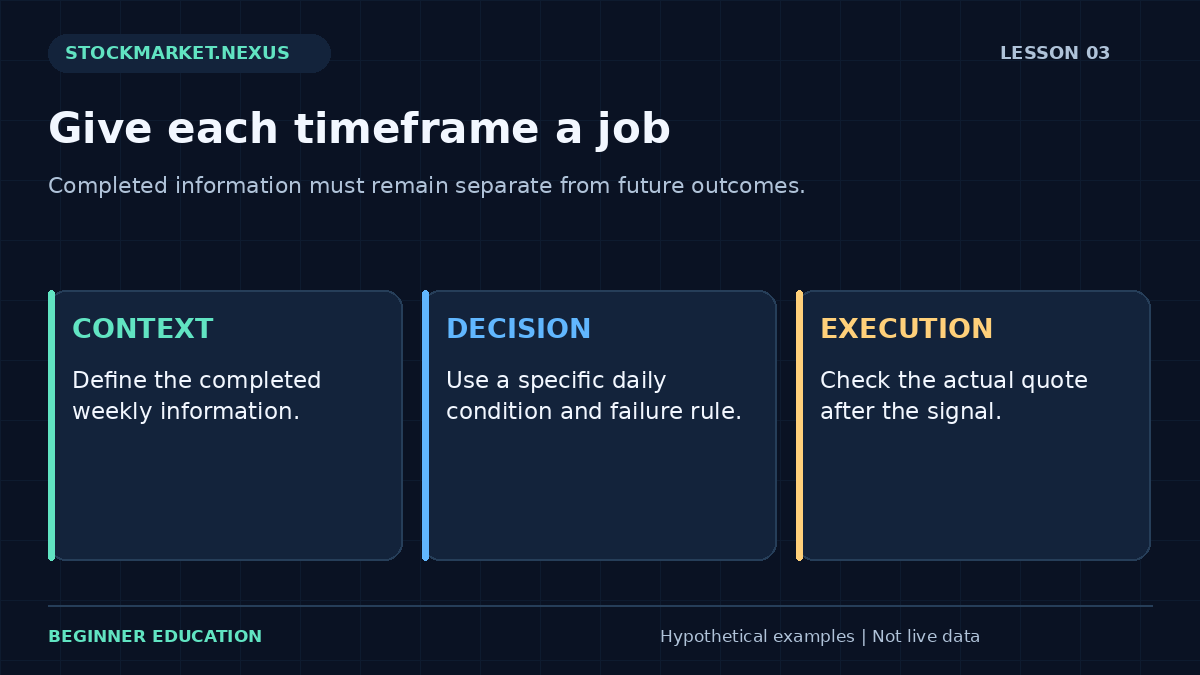
Read daily and weekly charts with explicit roles, completed-bar timing, data settings, and realistic signal-to-fill records.
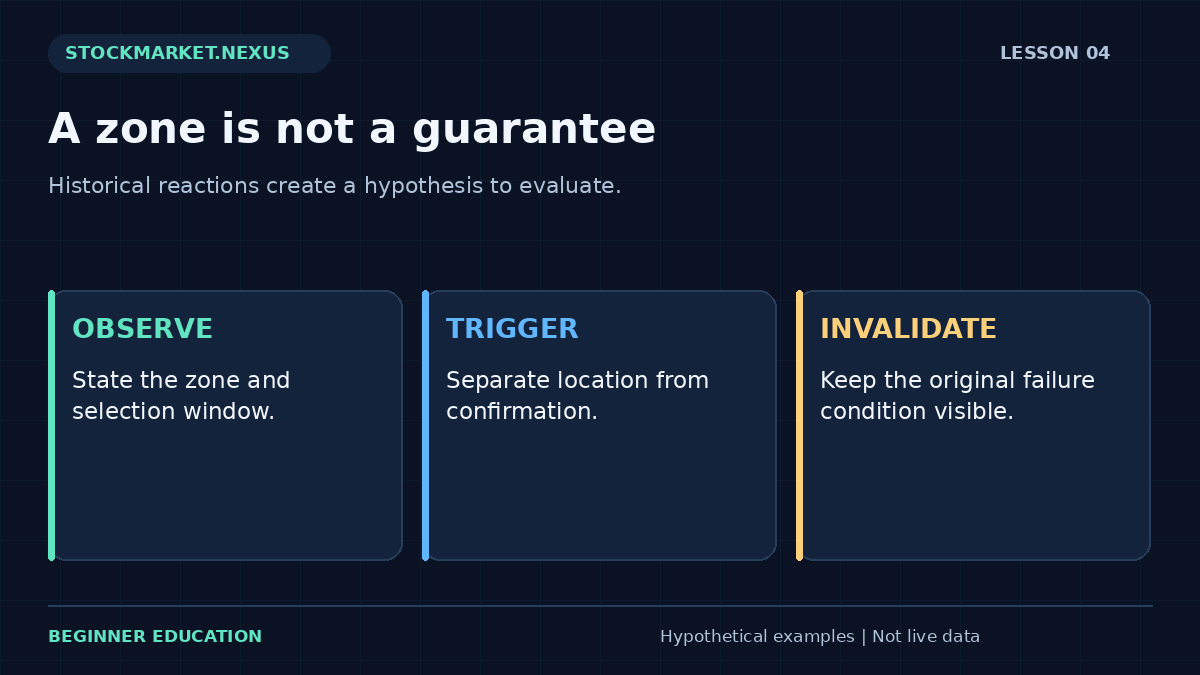
Turn support and resistance zones into testable swing-trading decisions with entry limits, invalidation, retests, and worked cases.
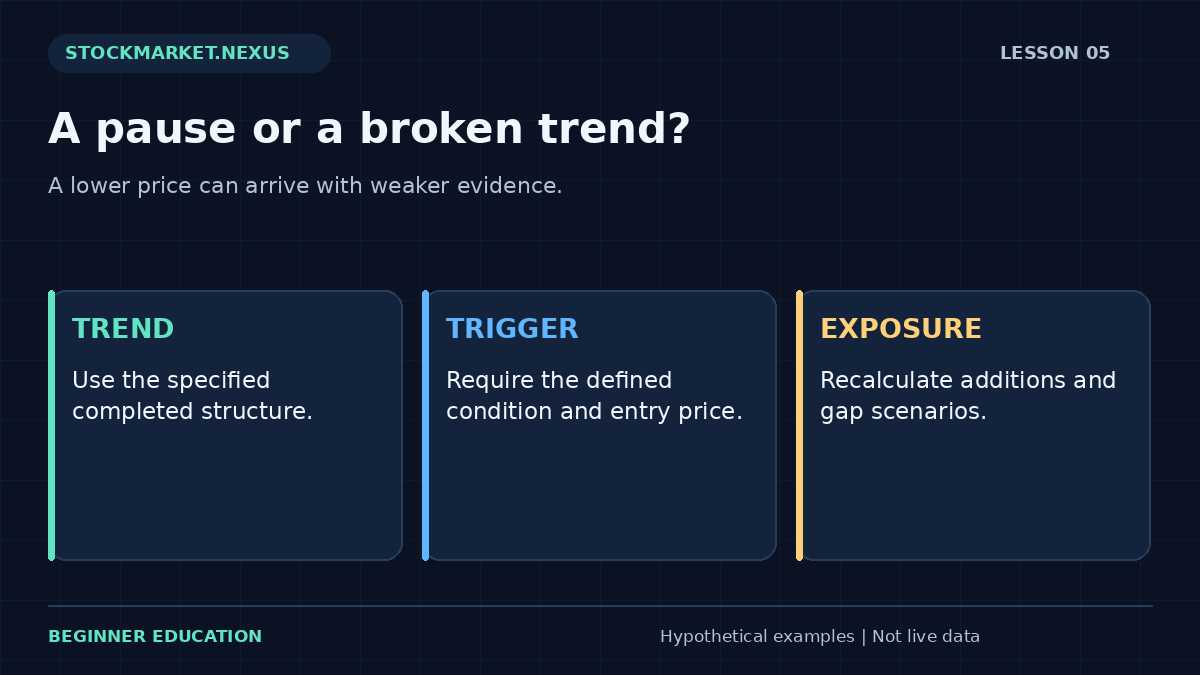
Define swing pullbacks using trend context, location, triggers, failure rules, additions, and realistic execution examples.
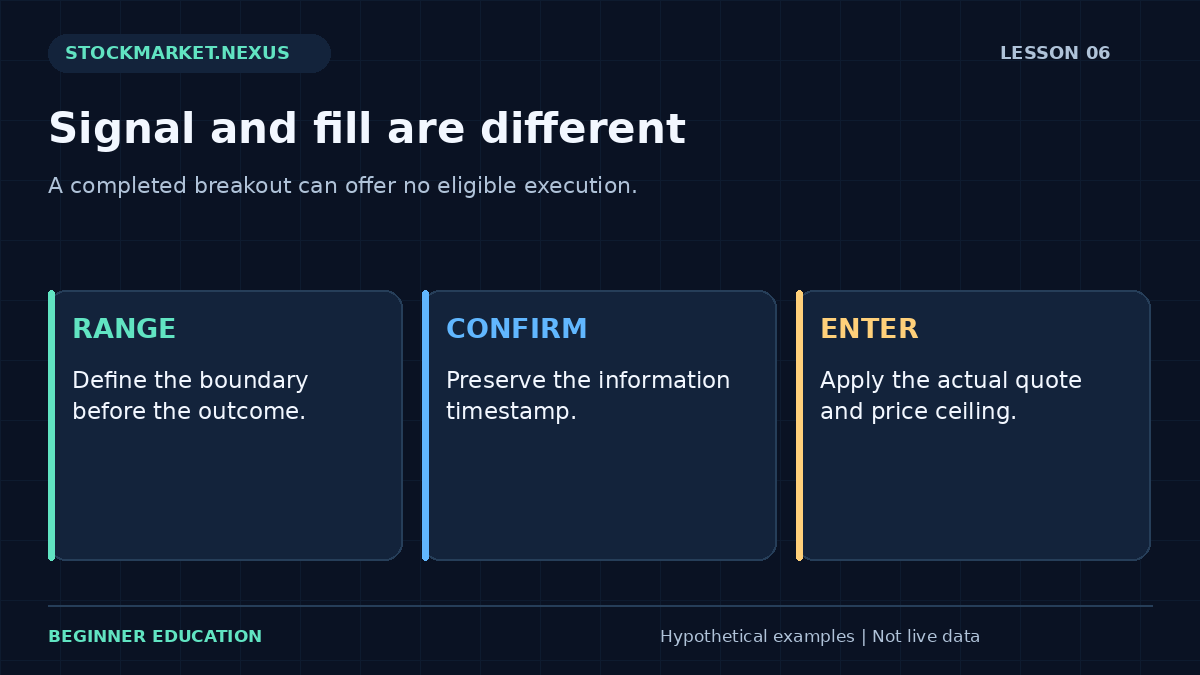
Study swing breakouts with fixed range definitions, close-based signals, entry ceilings, failed breaks, and honest no-fill records.
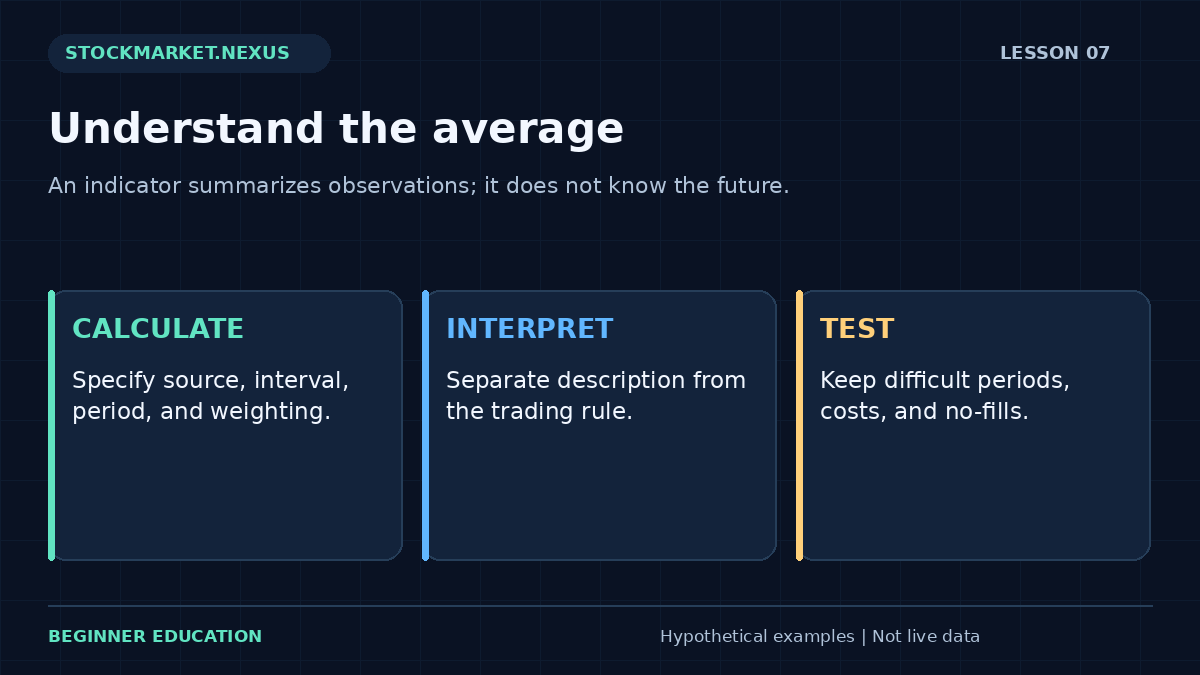
Calculate moving averages, distinguish context from triggers, compare settings, and avoid hindsight in swing-trading studies.
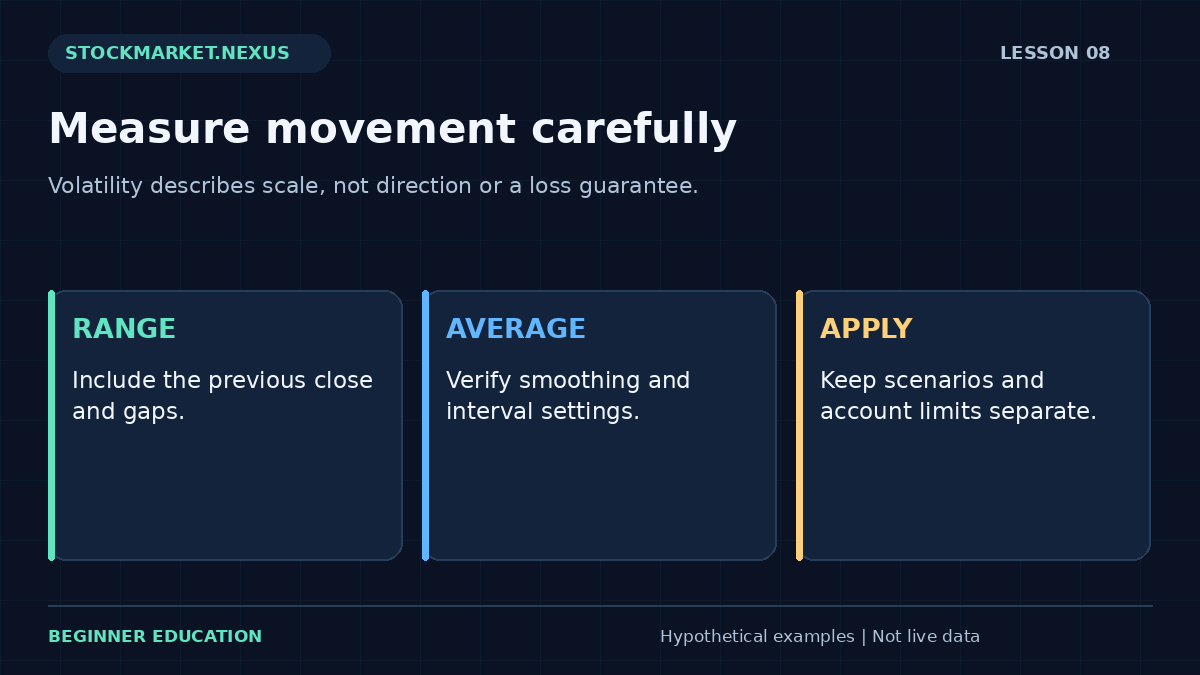
Calculate true range and ATR examples, normalize movement, and separate volatility context from quantity and affordability.
Calculate swing-trade quantity from cash, intended exits, charges, whole-share rounding, and explicit gap-risk scenarios.
Plan for overnight and weekend gaps, stop-order tradeoffs, unavailable execution, and simultaneous portfolio exceptions.
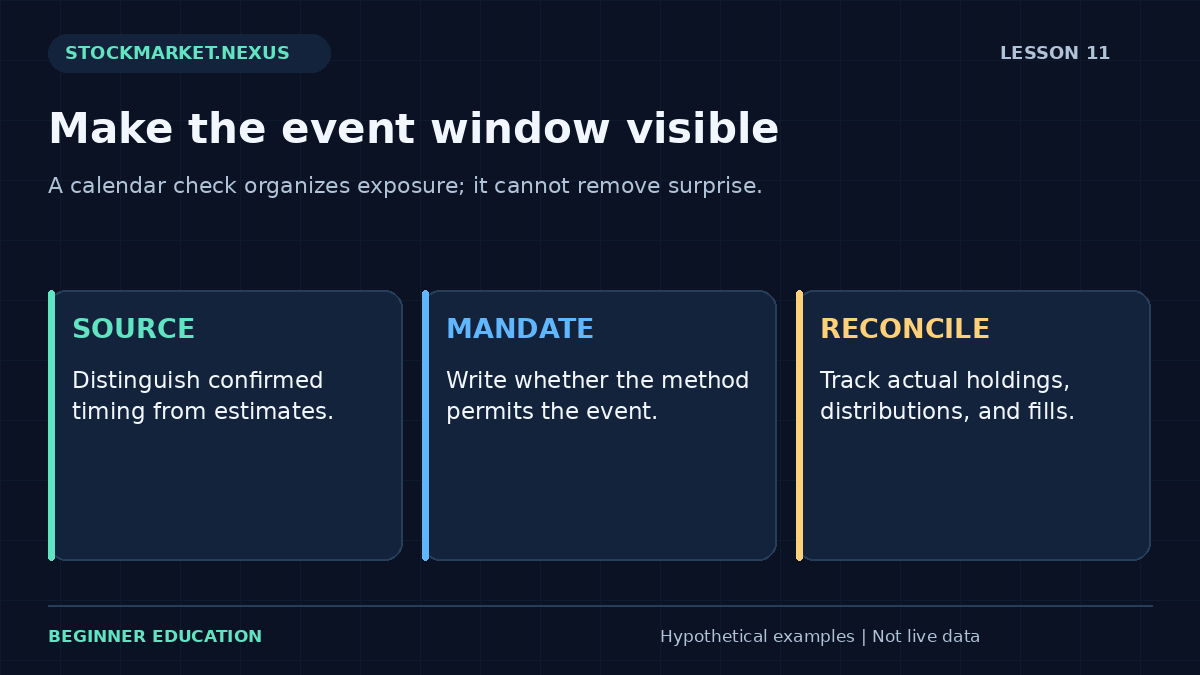
Build an event-aware swing-trading plan for earnings and distributions with source checks, eligibility, and total-result accounting.
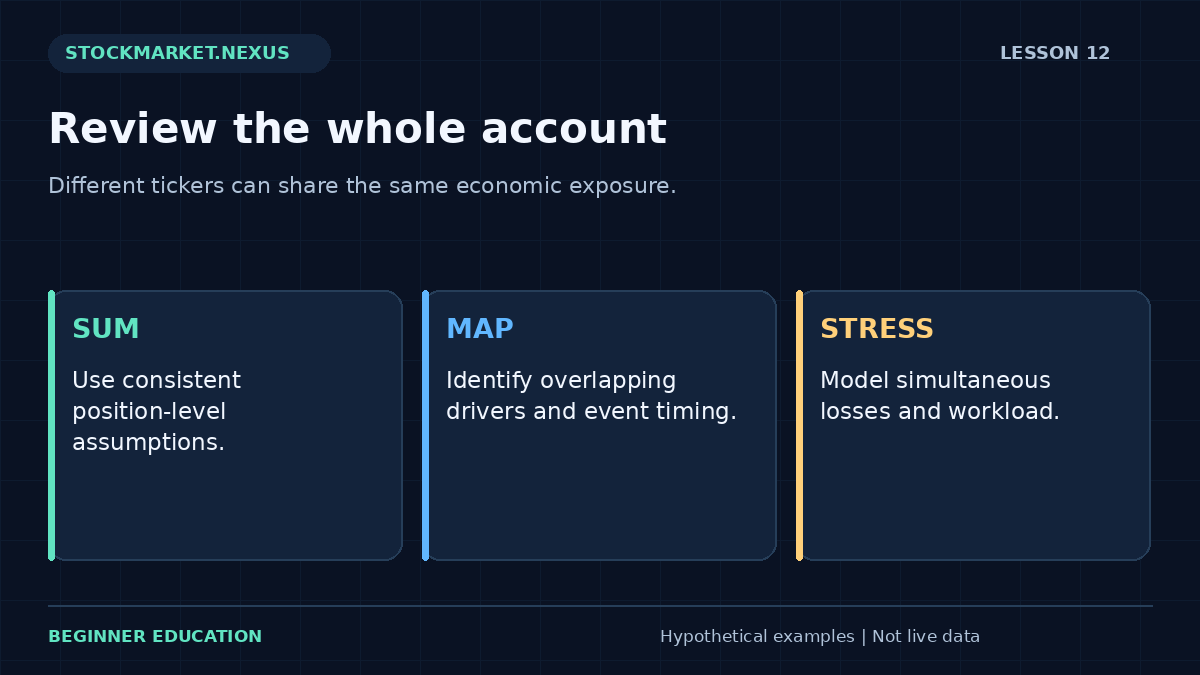
Aggregate planned loss, purchase commitments, concentration, and adverse scenarios across a swing-trading portfolio.
Get daily AI insights, market updates, and trade opportunities delivered to your inbox.