
Stock Trading for Beginners: Start Here Before Your First Trade
Learn how stock trading works, read an order ticket, calculate exposure, and build a practical first-week learning routine.
All information on this website is provided for educational and informational purposes only and does not constitute financial, investment or trading advice. Trading involves risk, including the possible loss of capital. Read the full disclaimer
Trading Hub
Core concepts every new trader needs before placing a first order.
12 LESSONS ยท BEGINNER LEVEL
Start with how markets work, learn orders and account rules, then practice sizing and planning. Each lesson includes original graphics, worked examples, and practical checks.
Understand the market / Learn the mechanics / Practice and plan
Start with Lesson 1
Learn how stock trading works, read an order ticket, calculate exposure, and build a practical first-week learning routine.
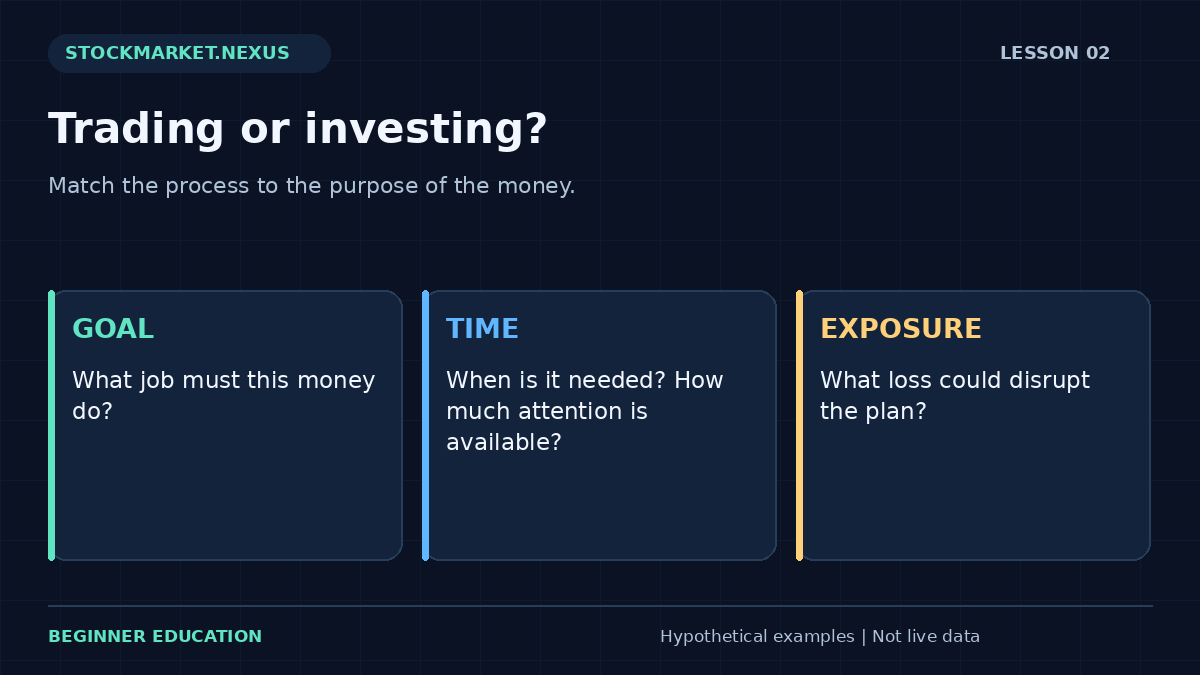
Compare trading and investing by purpose, time commitment, risk, costs, and the evidence needed to review each approach.
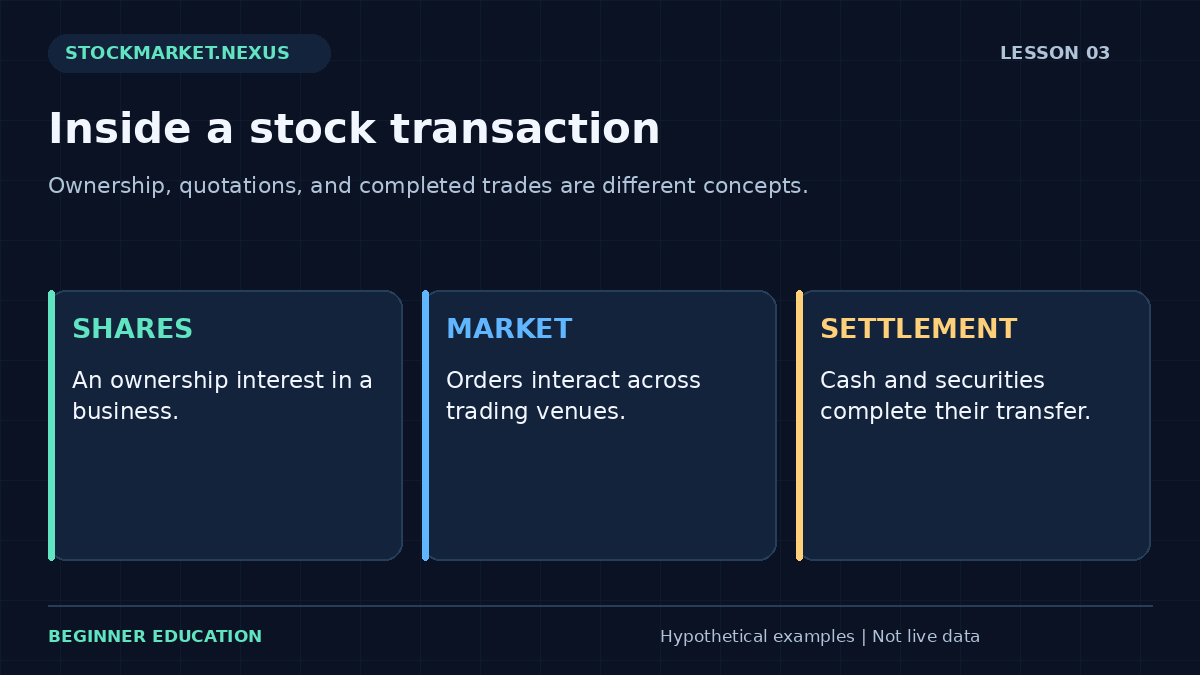
Follow a stock transaction from ownership and price formation through broker routing, execution, and settlement.
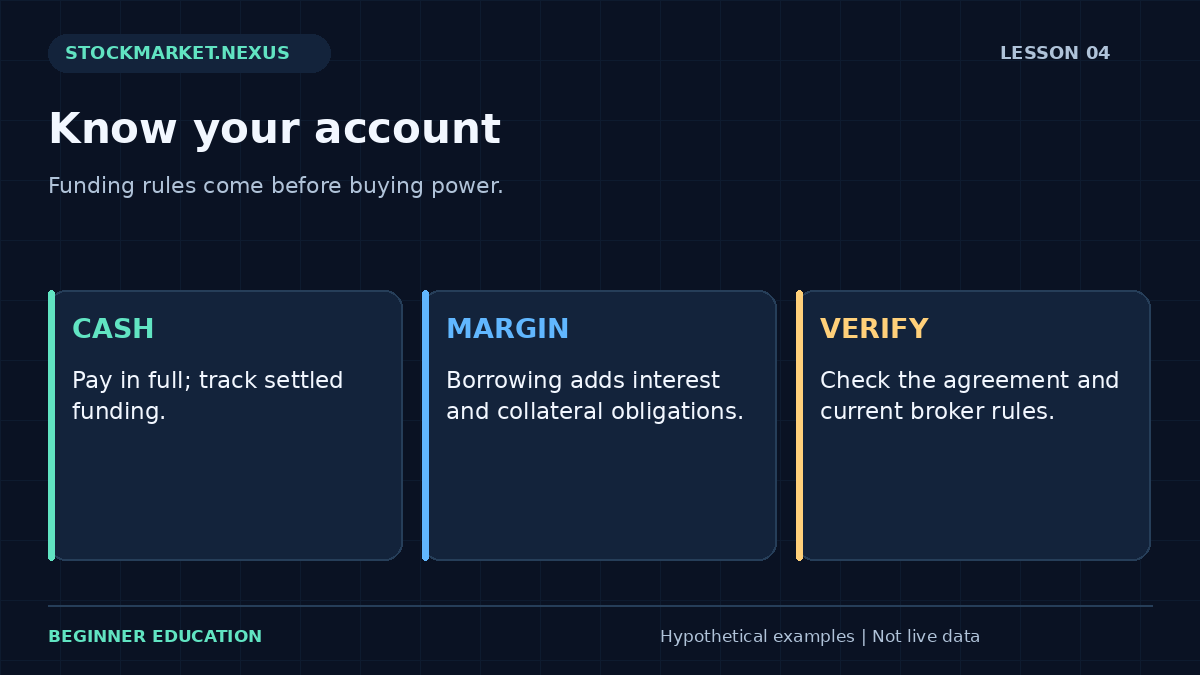
Understand settled cash, buying power, margin borrowing, leverage, and the 2026 transition in U.S. intraday margin rules.
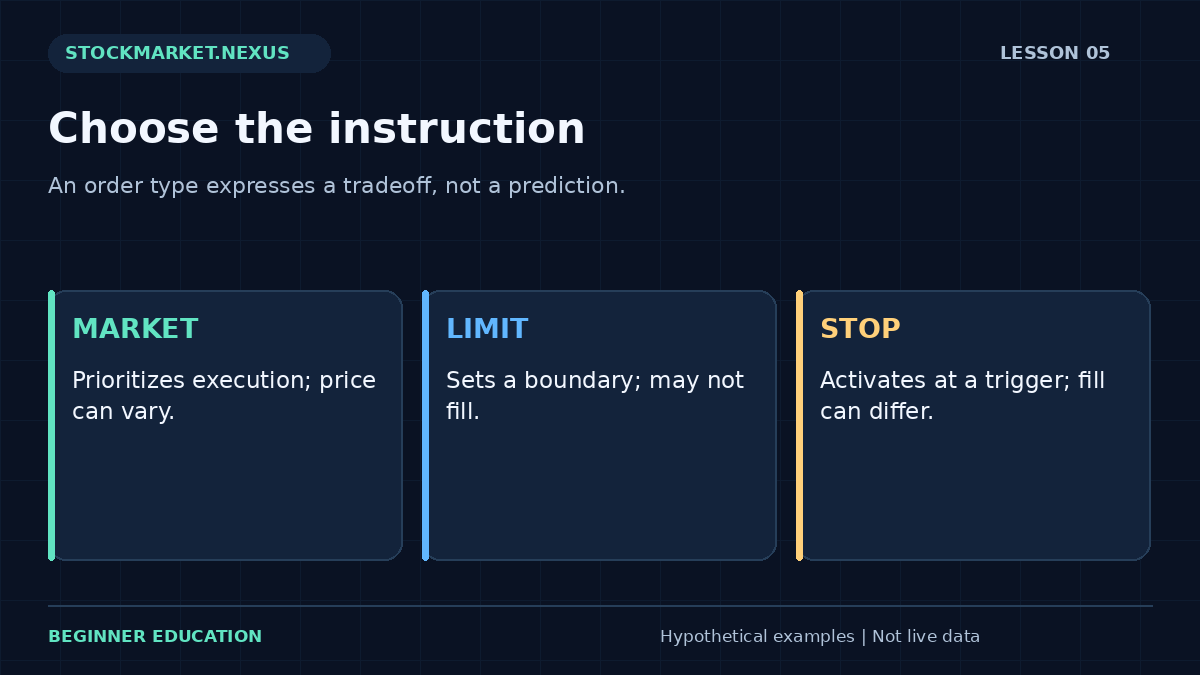
Compare market, limit, stop, stop-limit, and trailing-stop orders with partial-fill examples and an illustrated gap scenario.
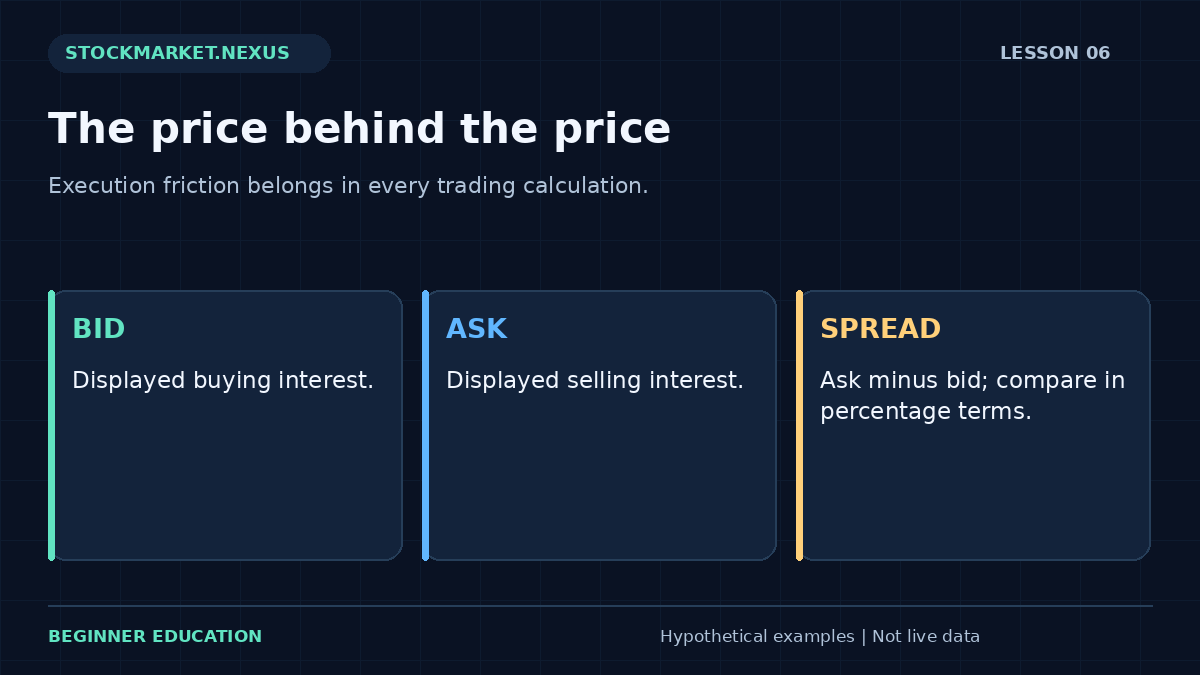
Calculate the spread, distinguish last price from executable quotes, and measure execution friction without double-counting costs.
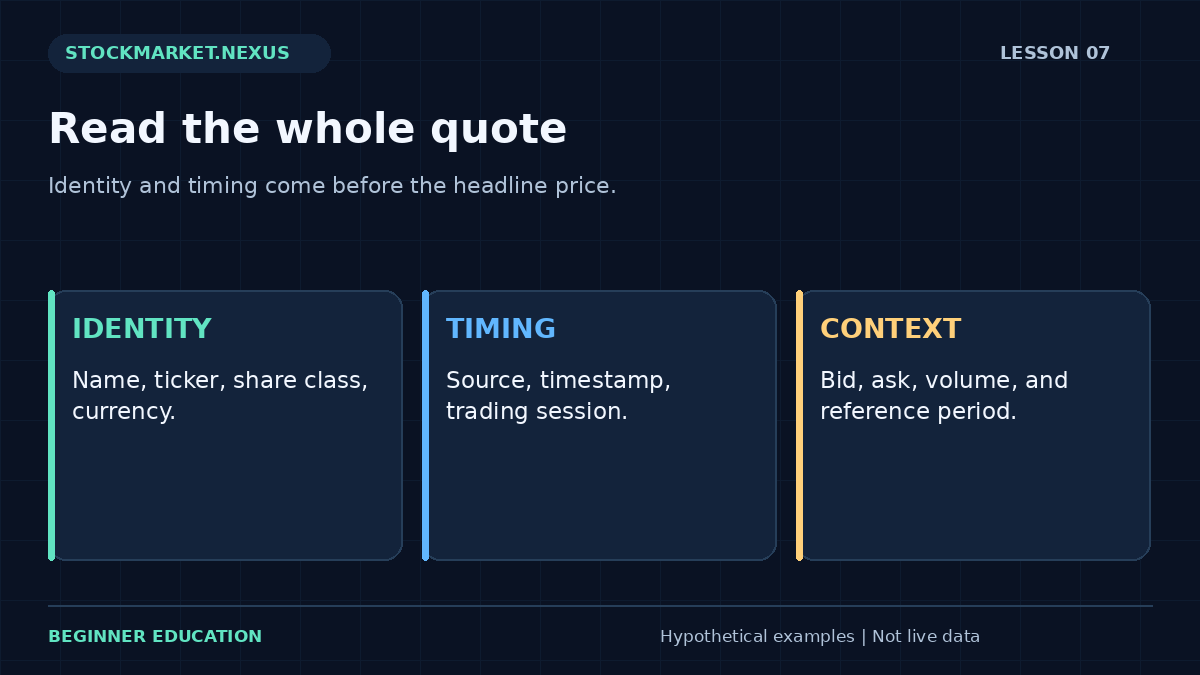
Read a stock quote in context: identify the security, verify timestamps, and interpret bid, ask, volume, daily change, and valuation fields.
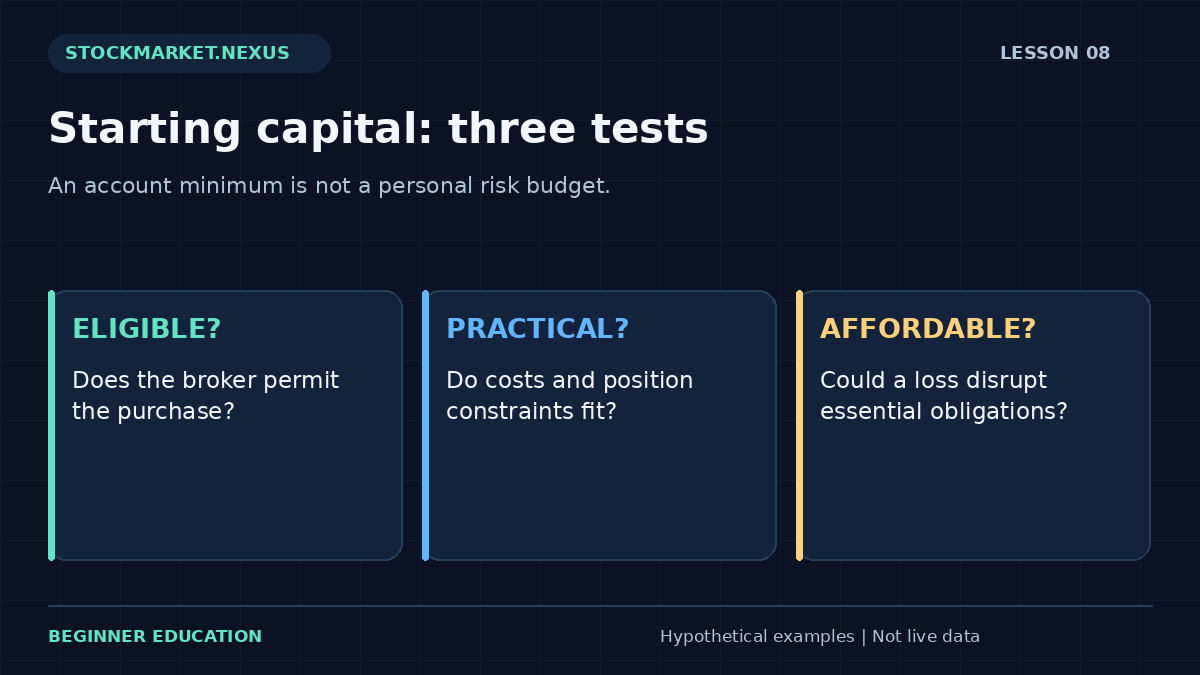
Separate broker minimums from affordability. Explore fractional shares, costs, account constraints, and realistic starting-capital examples.
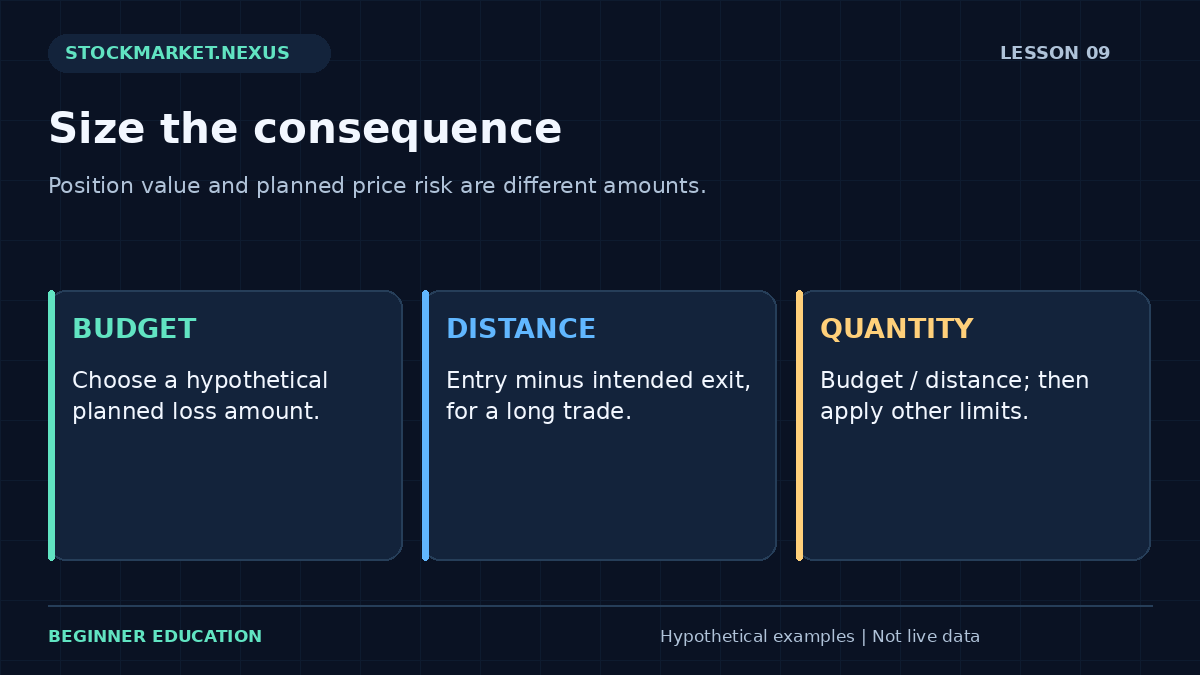
Calculate quantity from a hypothetical loss budget, then check cash, concentration, costs, and losses beyond an intended stop.
Build a realistic simulation routine with written rules, plausible fills, costs, journals, and honest readiness checks.
Create a one-page trading plan covering thesis, entry, quantity, exits, exceptions, and review, with a complete fictional example.
Use a practical pre-trade checklist to verify the security, funding, events, exposure, order fields, and post-submission status.
Get daily AI insights, market updates, and trade opportunities delivered to your inbox.