
The Pre-Session Routine: Prepare Data, Risk, and Attention Before Decisions
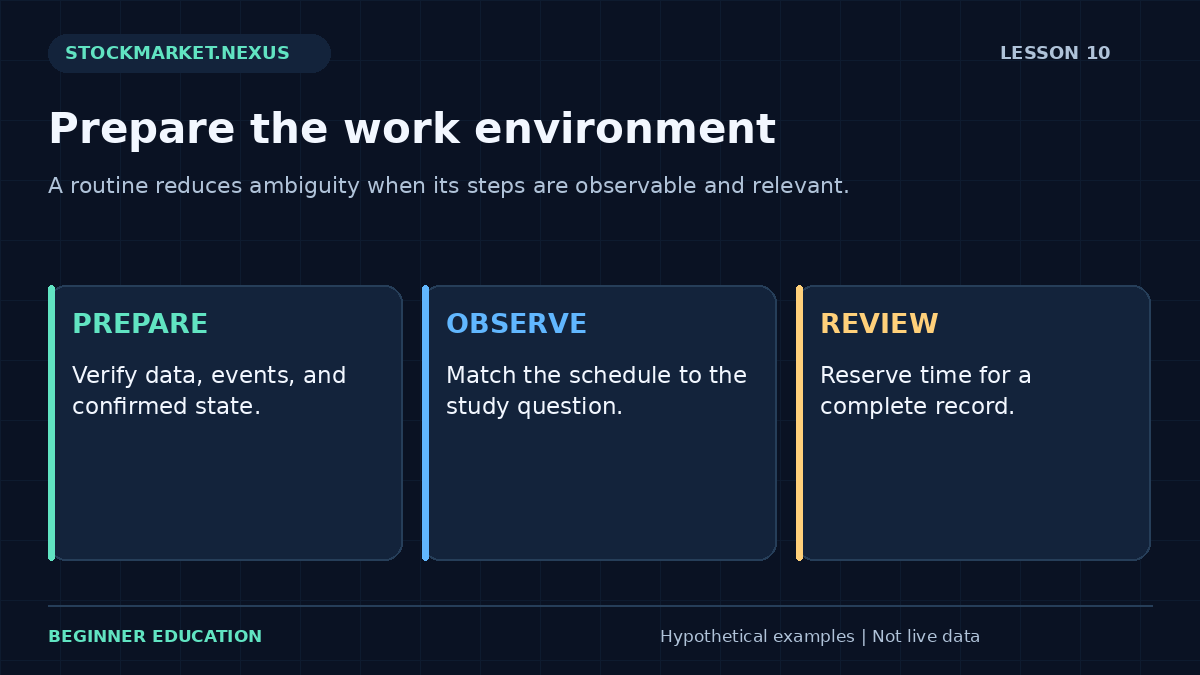
A routine reduces ambiguity when its steps are observable and relevant. Practice: Build a preparation schedule.
All information on this website is provided for educational and informational purposes only and does not constitute financial, investment or trading advice. Trading involves risk, including the possible loss of capital. Read the full disclaimer
Latest
Articles and guides on trading, market analysis and getting more out of the platform.
A routine reduces ambiguity when its steps are observable and relevant. Practice: Build a preparation schedule.
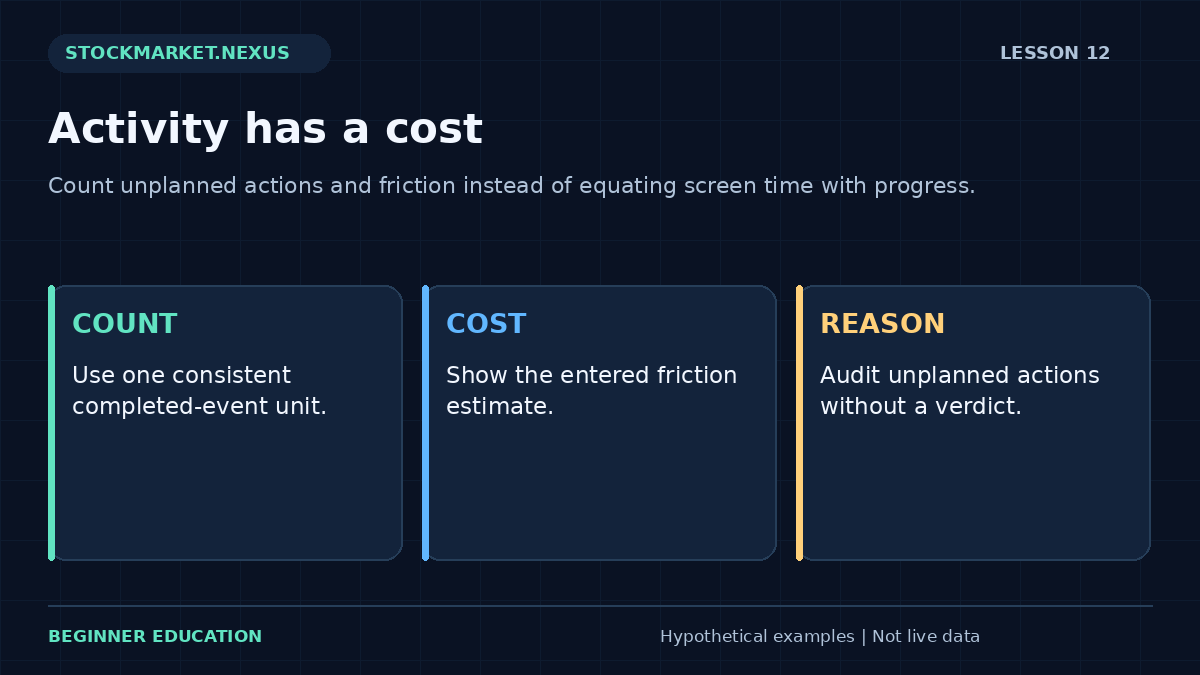
Count unplanned actions and friction instead of equating screen time with progress. Practice: Audit activity and estimated costs.
A pause supports review; it does not close positions or certify readiness. Practice: Write a pause-and-review response.
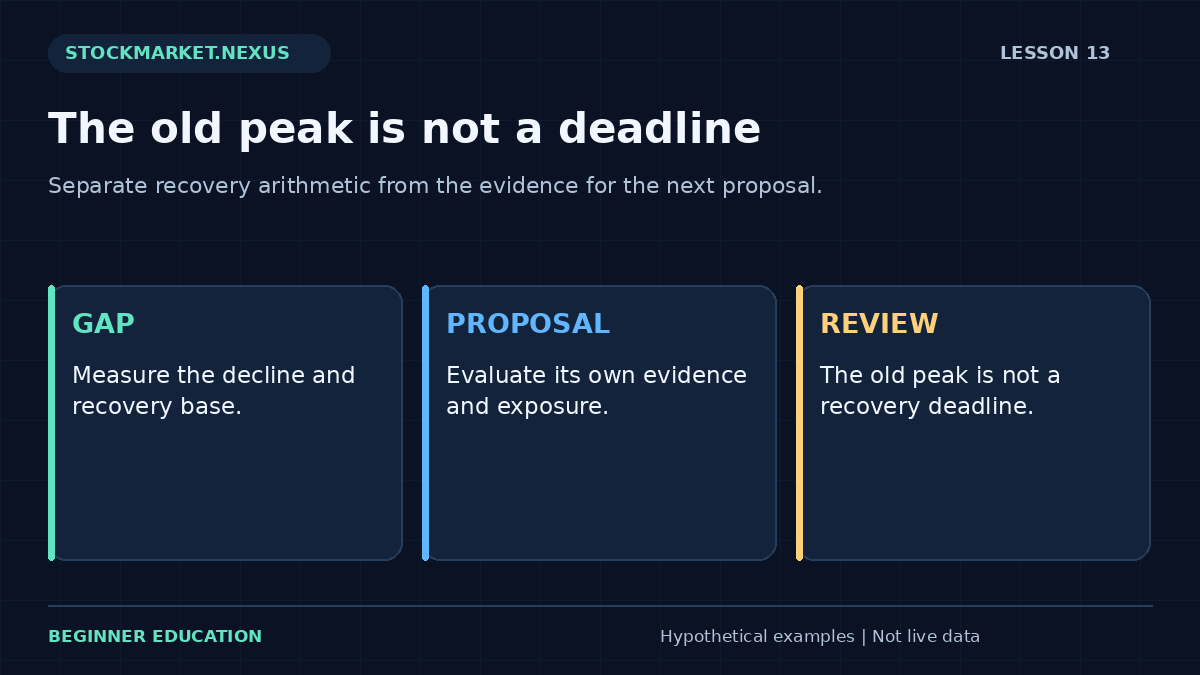
Separate recovery arithmetic from the evidence for the next proposal. Practice: Compare drawdown and proposed exposure.
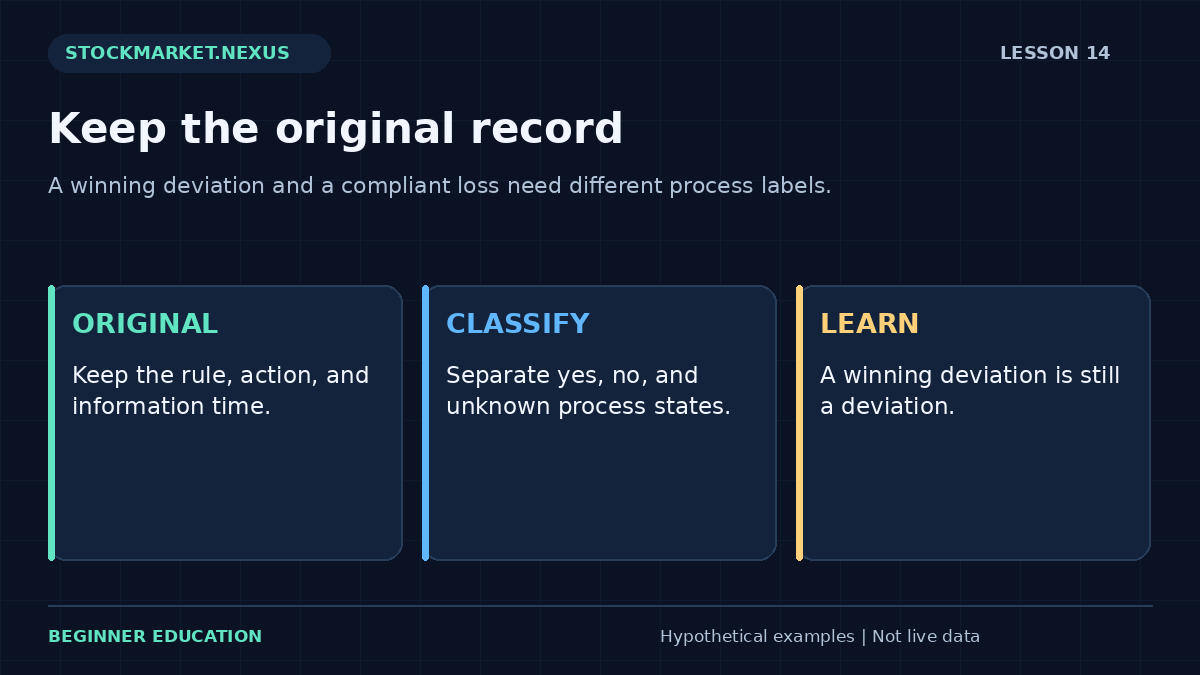
A winning deviation and a compliant loss need different process labels. Practice: Audit a process–outcome sample.
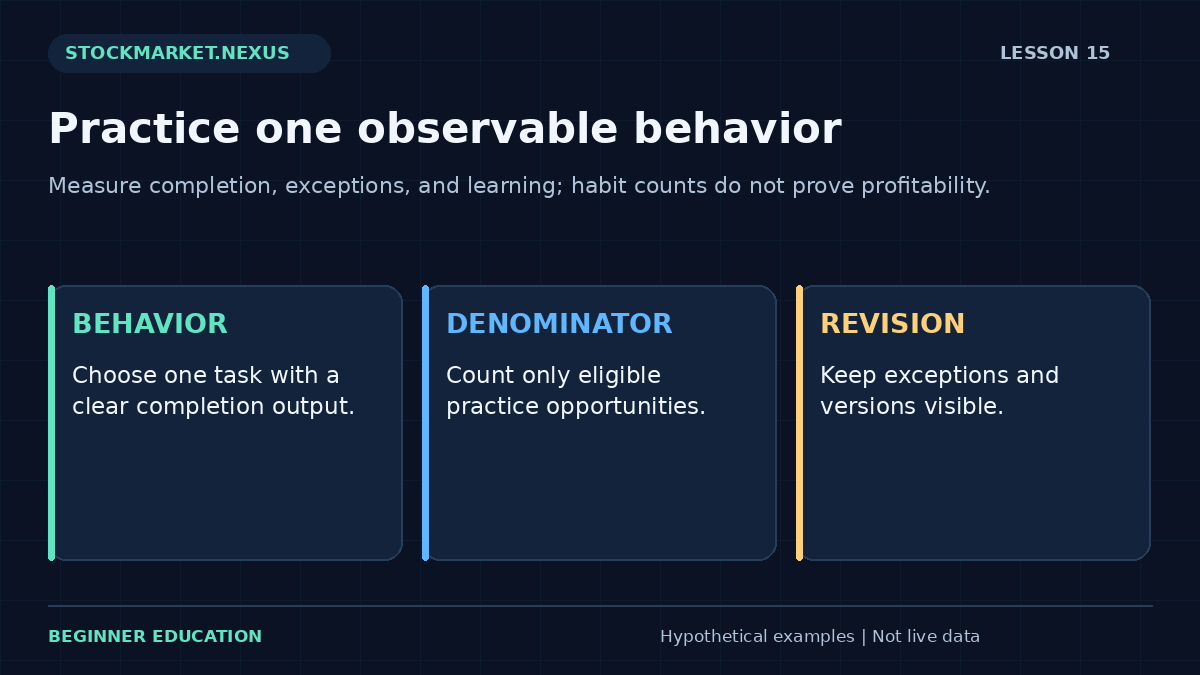
Measure completion, exceptions, and learning; habit counts do not prove profitability. Practice: Review a habit-practice sequence.
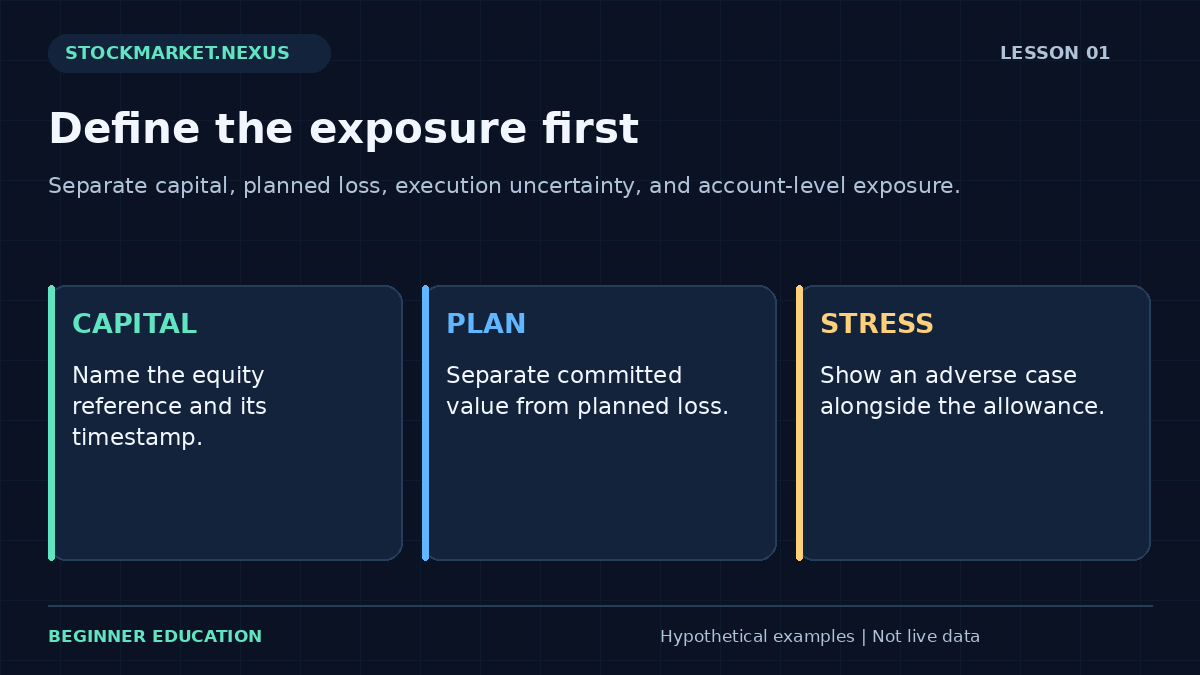
Separate capital, planned loss, execution uncertainty, and account-level exposure. Practice: Translate an allowance into dollars.
A share count depends on exit assumptions, costs, and available cash. Practice: Calculate a whole-share scenario.
Compare planned protective prices with actual or hypothetical execution. Practice: Compare planned and actual exit loss.
Separate target distances, assumed win rates, costs, and expected value. Practice: Test assumed expectancy.
Measure the peak, the decline, and the gain required to regain it. Practice: Calculate drawdown and recovery.
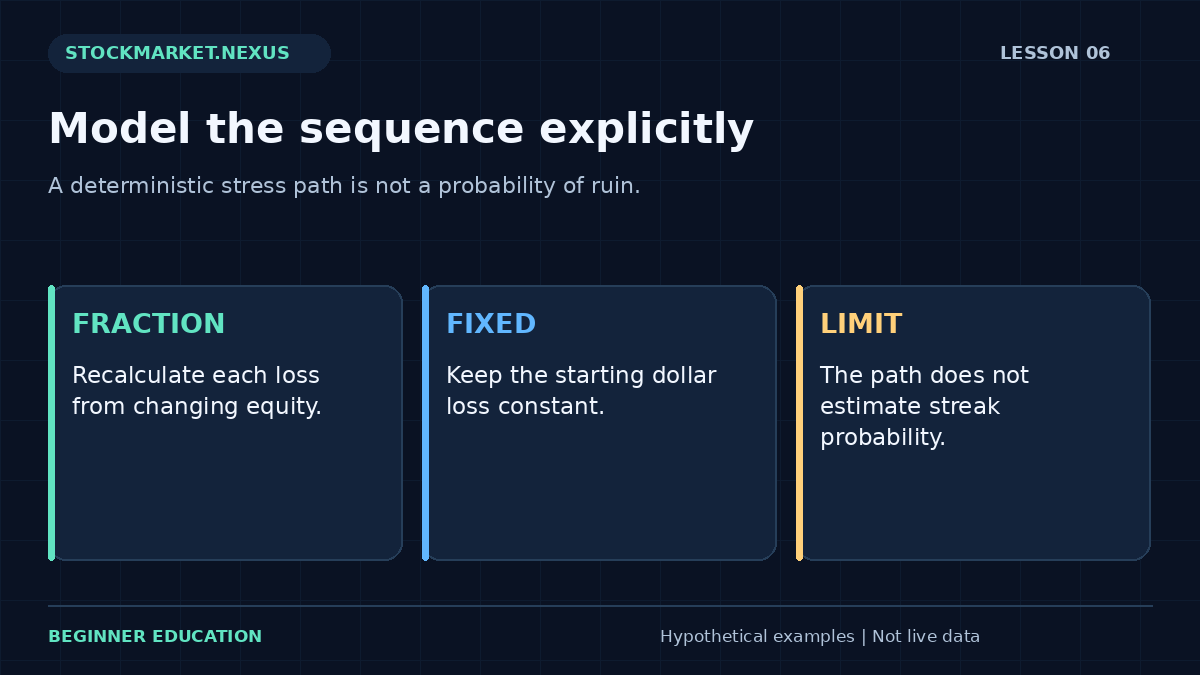
A deterministic stress path is not a probability of ruin. Practice: Compare fixed and fractional losses.
Get daily AI insights, market updates, and trade opportunities delivered to your inbox.