

How to Buy Stocks: A Beginner's Guide
Learn how to read a stock quote, choose an order type, and check a fill using a fictional brokerage order.
All information on this website is provided for educational and informational purposes only and does not constitute financial, investment or trading advice. Trading involves risk, including the possible loss of capital. Read the full disclaimer
Latest
Articles and guides on trading, market analysis and getting more out of the platform.
Learn how to read a stock quote, choose an order type, and check a fill using a fictional brokerage order.
Learn how indexes, stock prices, and market breadth can tell different stories, with a worked example for beginners.
A beginner's guide to understanding the stock market, its mechanisms, and the role of investors
Discipline describes observable behavior; it does not guarantee a profitable method. Practice: Separate process and outcome.
Name the cue, the observable response, and the review boundary. Practice: Build an if–then practice plan.
Use prewritten conditions and record missing information rather than forcing certainty. Practice: Audit a paper setup checklist.
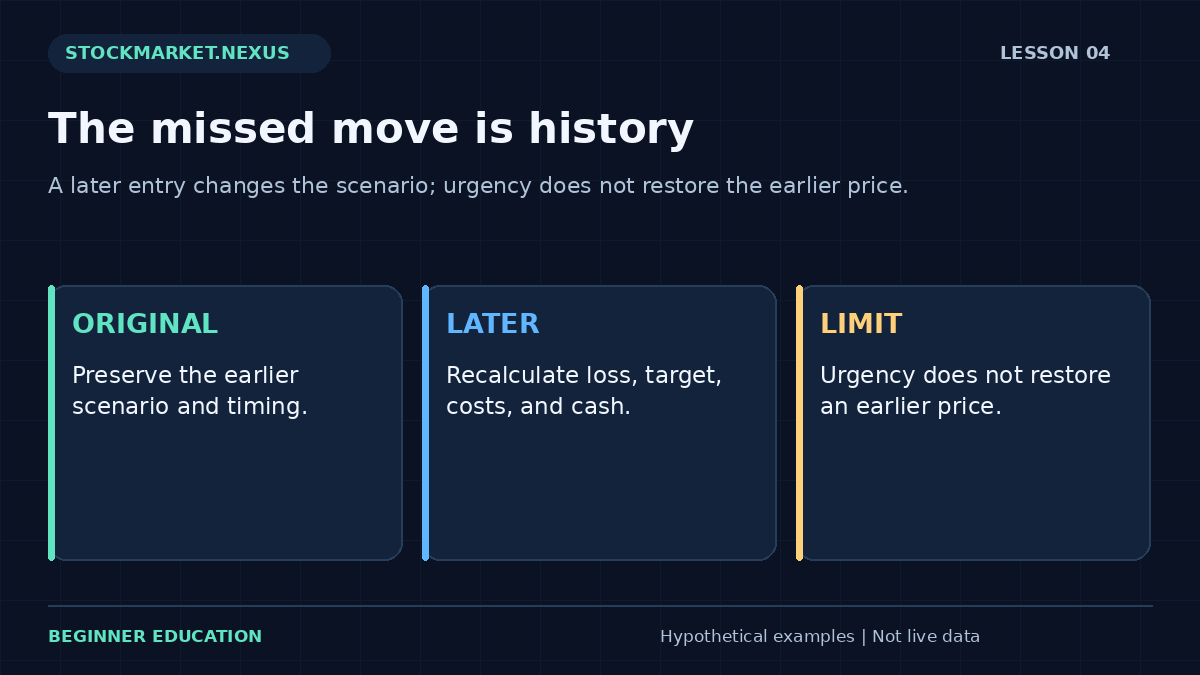
A later entry changes the scenario; urgency does not restore the earlier price. Practice: Compare original and late entries.
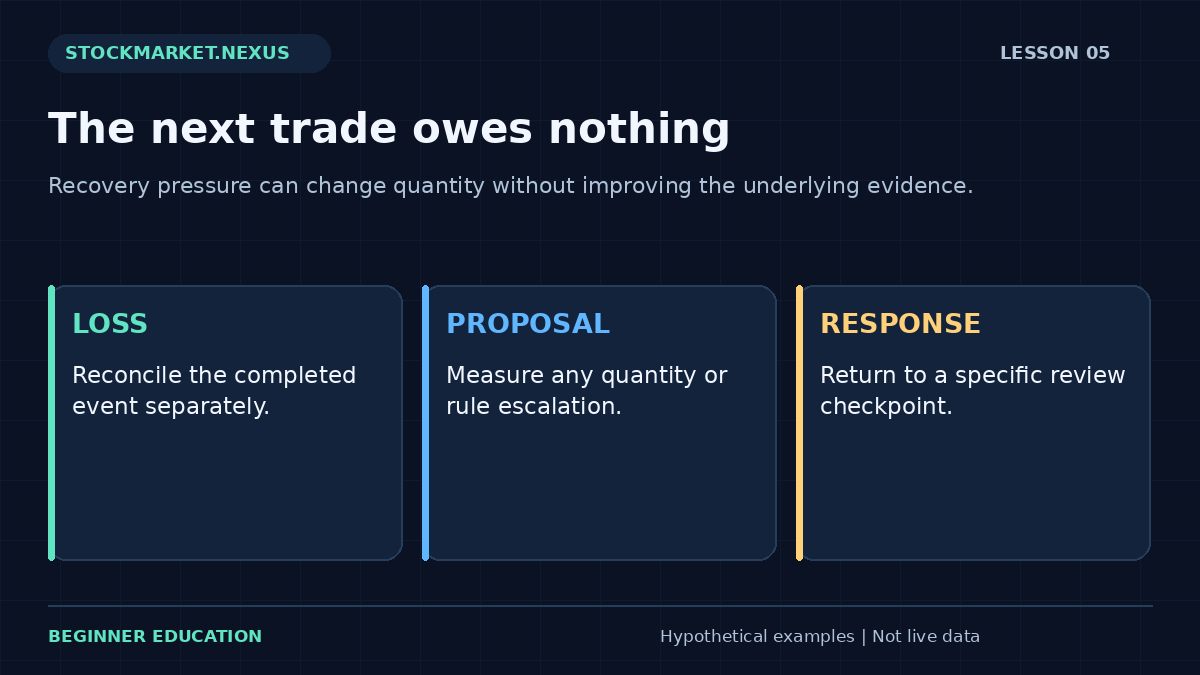
Recovery pressure can change quantity without improving the underlying evidence. Practice: Measure an escalation proposal.
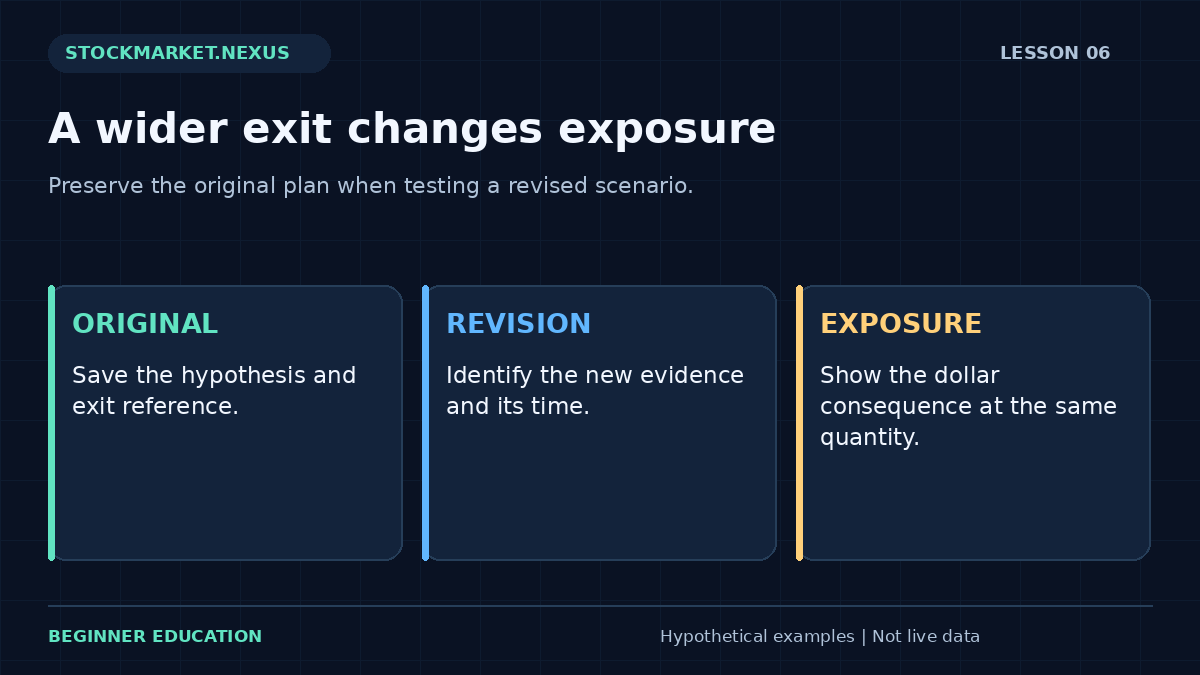
Preserve the original plan when testing a revised scenario. Practice: Compare original and revised exits.
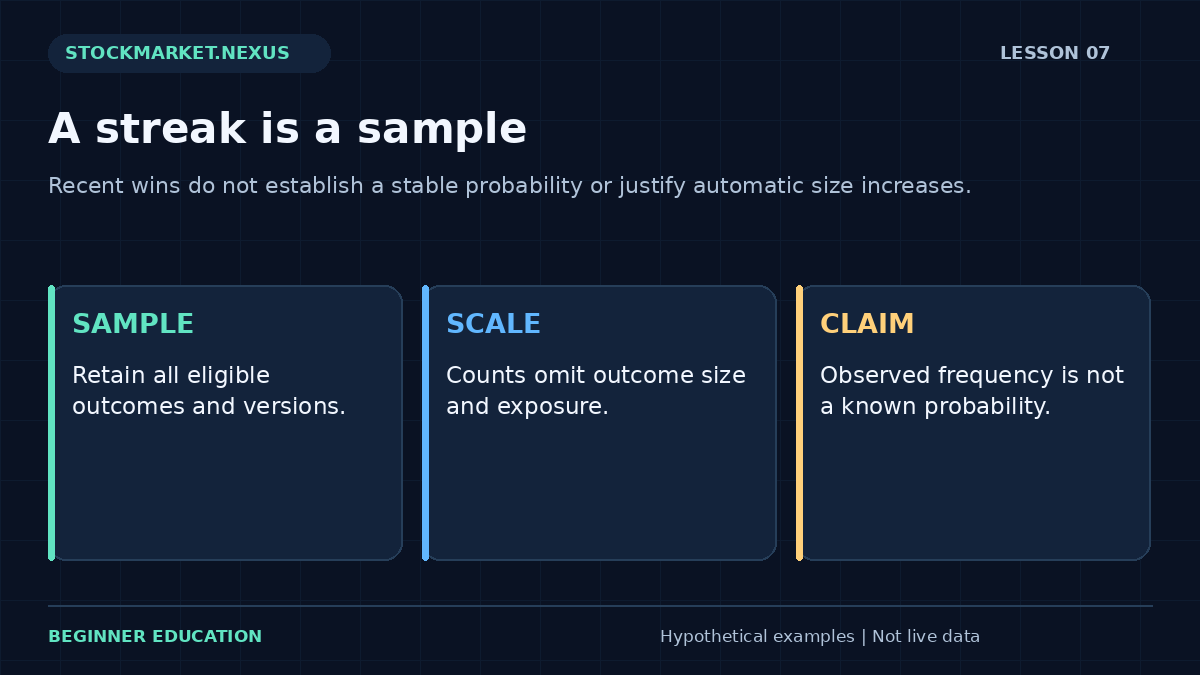
Recent wins do not establish a stable probability or justify automatic size increases. Practice: Describe a small outcome sample.
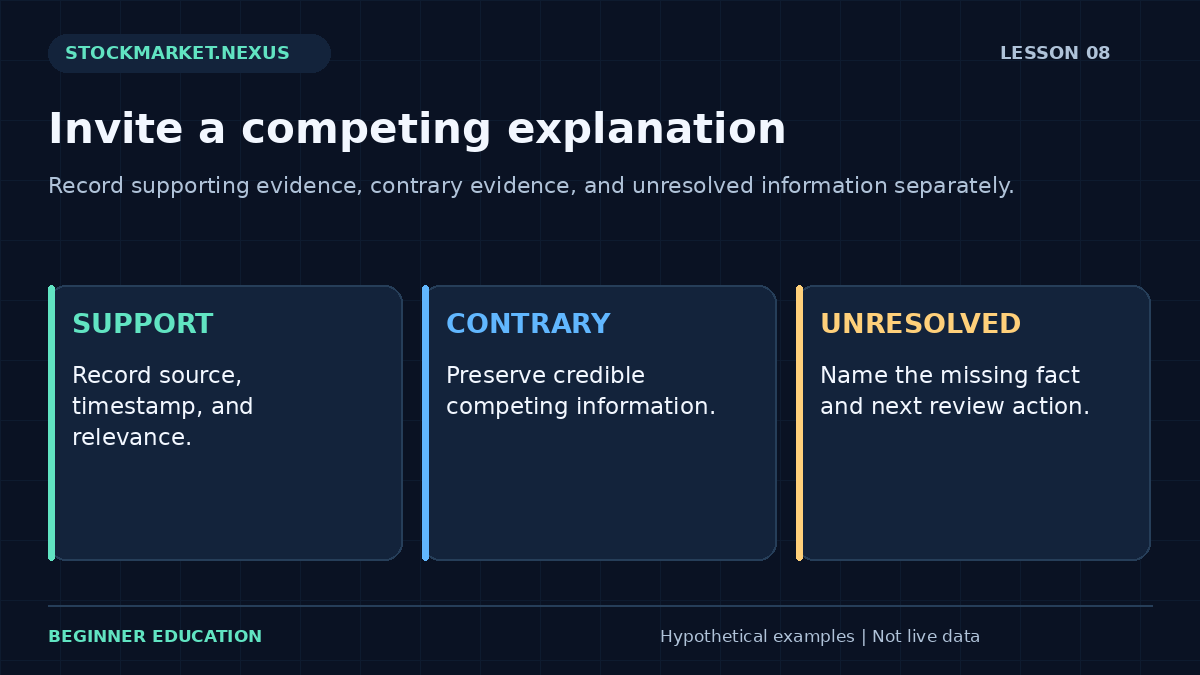
Record supporting evidence, contrary evidence, and unresolved information separately. Practice: Build a balanced evidence record.
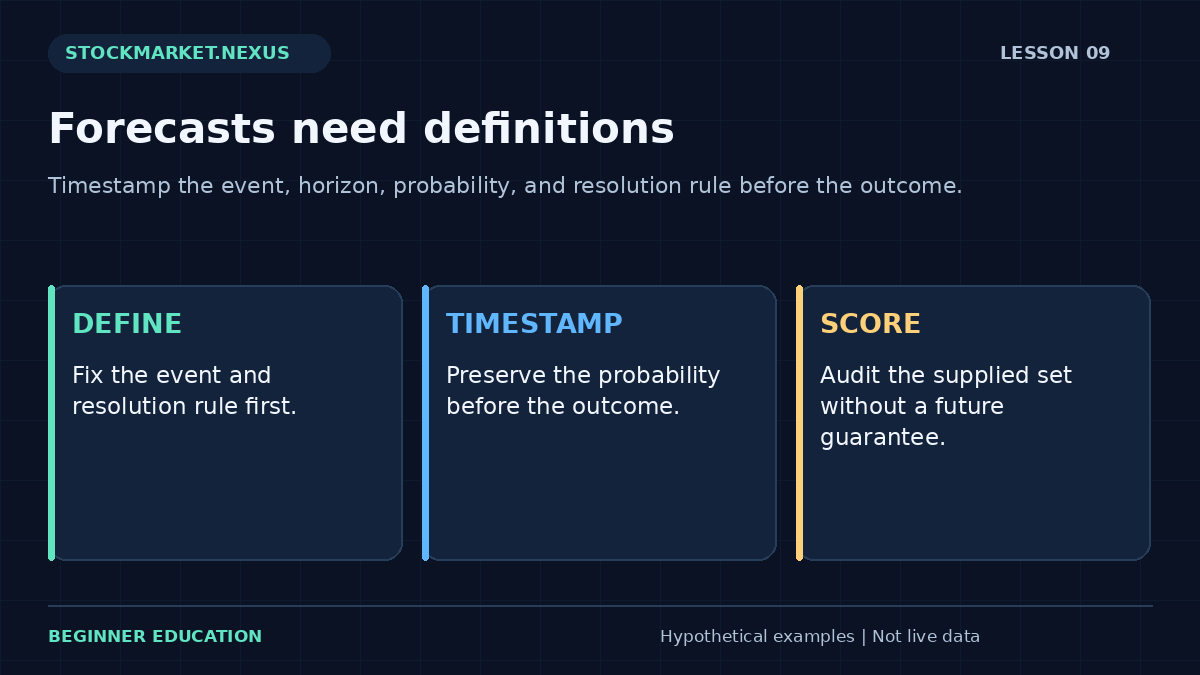
Timestamp the event, horizon, probability, and resolution rule before the outcome. Practice: Audit fictional probability forecasts.
Get daily AI insights, market updates, and trade opportunities delivered to your inbox.